```markdown
Unlock Key Lessons: Hue Jackson Net Worth, NFL to HBCU Coaching Case Study
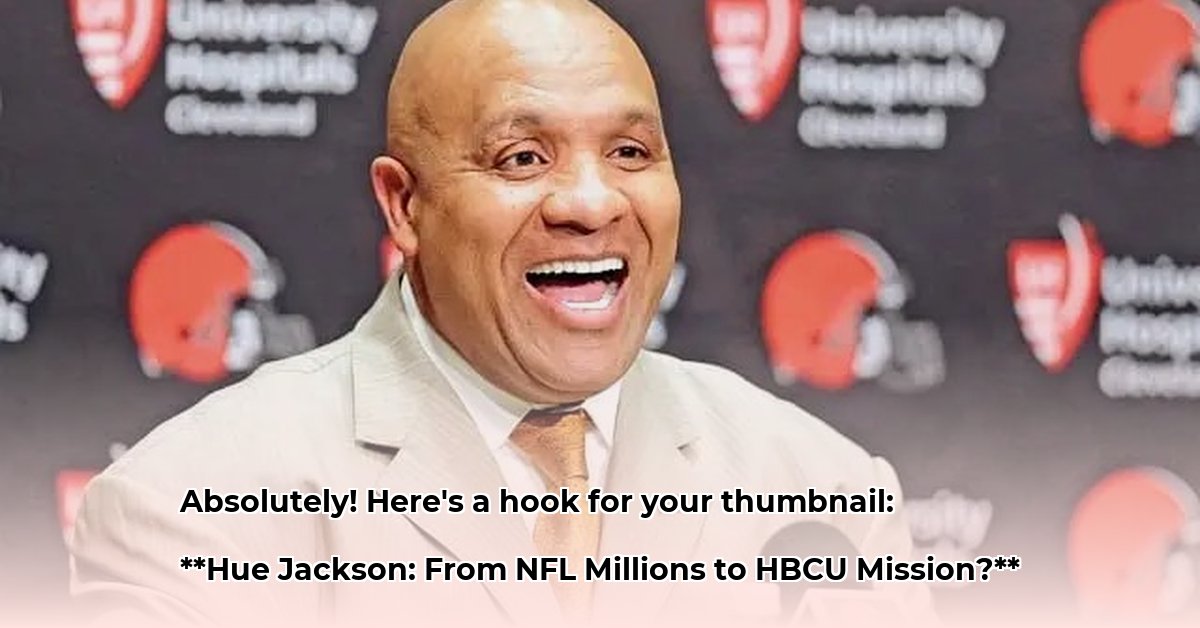
Ever wondered what it's like to transition from coaching in the high-stakes NFL to leading a team at a Historically Black College and University (HBCU)? Let's examine Hue Jackson's career, specifically focusing on his financial journey. We will dissect his path from prominent NFL positions to the unique challenges and opportunities within HBCU coaching, illustrating how these decisions have influenced his financial standing. By examining his contract with Grambling State, we can extract valuable insights applicable to aspiring coaches, HBCU athletic directors, and even NFL team management. Consider this a playbook for navigating the coaching world, offering guidance on fostering a successful career and making informed decisions. For comparison, consider this article on other coaches' net worth.
Hue Jackson Net Worth: From NFL Sidelines to HBCU Fields - A Coaching Case Study
Hue Jackson's career is a compelling narrative of transitions, prominently moving from the intense atmosphere of the NFL to the tradition-rich environment of HBCU football. It's more than just wins and losses; his journey offers a masterclass in career development, complex contract negotiations, and the ever-shifting landscape of coaching. How can stakeholders learn from this distinctive and insightful journey?
NFL Coaching Career: A Journey Through Different Leagues
Jackson's coaching career began in 1987, leveraging his background as a quarterback at the University of the Pacific. He honed his skills at several universities before entering the professional ranks. His rise in the NFL was marked by offensive coordinator roles for teams like the Washington Redskins and Cincinnati Bengals, highlighting his ability to design effective offensive strategies. His offensive strategies led to a number of successful seasons.
His tenure as head coach for the Oakland Raiders initially sparked optimism, but his time with the Cleveland Browns proved challenging, defined by a 3-36-1 record. What accounted for the success in one situation versus the setbacks in another? These are crucial questions for coaches and football management. Subsequently, Jackson transitioned to coaching at the HBCU level, first at Tennessee State, and later as the head coach at Grambling State University.
Decoding The Dollars: Hue Jackson's Financial Landscape
So, what about hue jackson net worth, and how did his career choices impact it? Current estimates place it between $10 million and $12 million as of 2025. This sum primarily derives from his NFL earnings, including a reported $5 million annual salary during his tenure with the Cleveland Browns. His contract with Grambling State, valued at $1.6 million over four years, with incentives based on team performance, also contributed.
Jackson's arrangement with Grambling State garnered attention due to its inclusion of incentives linked to achievements against Football Bowl Subdivision (FBS) teams and revenue generation opportunities. Did this ambitious plan come to fruition? His tenure was cut short, highlighting the financial dynamics involved and underscoring the financial realities for both the coach and the school.
Case Study: Lessons Gleaned From Grambling State
Jackson's time at Grambling State provides a detailed examination of HBCU athletics. His contract stipulated that he would receive 25% of revenues from sponsorships and other income-generating activities. Why is this significant? These incentives are often used to attract high-profile coaches but also place pressure on them to achieve results and boost revenue. Often, contracts with incentives have proven to yield good results in the long run.
Here’s a breakdown of what various stakeholders can learn from this situation, acting as a guide for future endeavors:
| Stakeholders | Lessons Learned |
|---|---|
| Aspiring Coaches | Broaden your skillset to enhance your versatility and marketability; don't limit yourself to one specific area. Focus on networking and continuous professional development. |
| HBCU Athletic Directors | Carefully weigh the advantages and disadvantages of revenue-sharing contracts with coaches to ensure financial sustainability. |
| NFL Teams | Consider coaches from HBCUs to gain diverse perspectives on the game and identify unique talent. |
Jackson's experiences present valuable insights for stakeholders in the sports industry, providing a basis for future strategic decision-making.
Actionable Intelligence: Crafting Your Coaching Strategy
So, what key takeaways can be derived from Hue Jackson's career path for various stakeholders?
- For Aspiring Coaches: Chart your career path by developing a diverse set of skills and proactively expanding your professional network for better opportunities and career advancement.
- For HBCU Athletic Directors: Carefully balance incentivizing performance with safeguarding the institution's financial health, ensuring long-term stability and growth.
- For NFL Teams: Seek talent in unconventional places, including coaches with HBCU experience, to foster innovation and diversity within the organization.
Hue Jackson's career transcends mere wins and losses, and instead it serves as a case study that provides actionable intelligence for anyone involved in American football. His experiences, from contract negotiations to career navigation, offer useful lessons for coaches, administrators, and anyone seeking to understand the nuances of the sport's business aspects. It highlights the importance of adaptability, strategic financial planning, and identifying talent across various platforms in the ever-evolving football landscape.
How Termination Impacts Coaching Contracts
Key Takeaways:
- Hue Jackson's net worth is estimated between $10 million and $12 million, accumulated through a long coaching career in the NFL and NCAA.
- His time with the Cleveland Browns, especially the winless 2017 season, raises questions about the balance between organizational strategies and coaching influence within a team.
- Jackson's brief tenure at Grambling State, concluding after only two seasons, emphasizes the financial risks tied to coaching contracts at HBCUs.
- Controversies surrounding his tenure with the Browns, including allegations of incentivized losing (also known as "tanking"), highlight the tensions between rebuilding and maintaining competitive integrity in the NFL.
- To mitigate issues, NFL teams, coaches, and HBCUs need to protect themselves with contract addendums and clearly align their expectations in the contract.
Hue Jackson's Financial Standing: A Career Overview
Hue Jackson has accumulated a substantial financial reserve, estimated between $10 million and $12 million; this wealth is a direct result of his extensive coaching career in both the NFL and NCAA. Notable positions include roles with the Washington Redskins, Atlanta Falcons, Oakland Raiders, and Cincinnati Bengals. These positions culminated in head coaching roles with the Raiders and the Browns. His annual base salary before becoming Browns head coach was $5 million.
Grambling State: A Short and Costly Chapter
After his NFL tenure, Jackson signed a four-year, $1.6 million contract with Grambling State University in December 2021, translating to $400,000 annually, plus incentives for wins and championships. This compensation made him one of the highest-paid coaches in the Football Championship Subdivision (FCS). However, the agreement ended prematurely after two seasons.
The question arises: how does termination impact coaching contracts? In Jackson's situation, only the initial two years of his Grambling contract were guaranteed. Consequently, the university likely encountered considerable financial repercussions upon his dismissal due to early termination clauses within the contract.
Cleveland Browns Controversy: Tanking Allegations
Adding complexity to Jackson's story are claims that he was incentivized to lose games while serving as head coach for the Cleveland Browns. These allegations emerged amidst Brian Flores' lawsuit against the NFL. While an independent investigation did not find sufficient evidence to validate Jackson's claims, it underscored potential conflicts between rebuilding strategies and competitive integrity.
The Browns' "Four-Year Plan" emphasized draft picks and deferred free agency spending, posing challenges to constructing a competitive roster. Jackson was ultimately terminated after a 2-5-1 start to the 2018 season, despite the team transitioning into "win" mode.
Lessons Learned From Jackson's Career
Jackson's journey offers invaluable lessons for all those involved in the world of football.
| Stakeholders | Short-Term (0-1Y) | Long-Term (3-5Y) |
|---|---|---|
| NFL Teams | Review and revise coaching contract language to eliminate ambiguity regarding incentives, and conduct thorough due diligence on coaching candidates to ensure alignment with organizational goals and values. | Develop clearer guidelines on acceptable rebuilding strategies to maintain competitive integrity, and invest in leadership development programs for coaching staff and management to foster collaboration and effective communication. |
| NFL Coaches | Advocate for contract transparency and seek legal counsel to fully understand all clauses, and focus on building a strong coaching track record by demonstrating consistent performance and ethical conduct. | Enhance leadership and communication skills to effectively manage players and navigate organizational challenges, and develop strategies for building a positive team culture that fosters performance, resilience, and ethical behavior. |
| Grambling State Univ. | Re-evaluate the coaching selection process and contract terms to ensure alignment with the institution's mission and values, and implement stricter performance metrics and accountability measures to drive sustainable improvement. | Develop a long-term strategic plan for the football program's success, focusing on talent development, sustainable resources, and community engagement to build a strong foundation for long-term growth and stability, and promote the program's |